
Sensory play and autism: why it helps and how to start
If you are raising an autistic child, you have probably noticed something the advice books often miss: they do not just enjoy sensory play, many of them need it. Spinning wheels, squishing something soft, lining things up, feeling a heavy weight on their lap — these are not random quirks. They are a child finding the sensory input their nervous system is asking for. This guide explains why sensory play matters for autistic children and how to bring more of it into an ordinary day.
What sensory play actually means
Sensory play is any activity that engages one or more of the senses — touch, sight, sound, smell, taste, movement or body position. For an autistic child, whose senses may be turned up high or dialed down low, that input is not just fun. It is how the brain learns to make sense of the world, regulate big feelings, and stay in a calm enough state to learn and connect.
Why is sensory play important for autism?
Many autistic children experience sensory processing differently. Some seek out strong input — deep pressure, bright colours, repetitive sounds — while others are easily overwhelmed by noise, texture or light. Good sensory play meets a child where they are. It offers the input they are looking for in a safe, controllable way, so they can settle, focus and feel in charge of their own body.
- Regulation — deep pressure and repetitive input can calm an overloaded nervous system
- Focus — a single, predictable activity is easier to attend to than a noisy, busy one
- Body awareness — heavy items and textures build a sense of where the body is in space
- Confidence — cause-and-effect play gives clear, honest feedback that builds trust
- Communication — shared sensory play creates natural moments for pointing, naming and turn-taking
How does sensory play help autism day to day?
Think of sensory play as a way to fill a child's cup before a hard thing, or to empty it after one. A few minutes of deep-pressure input before a car journey might mean the difference between a meltdown and a calm seatbelt click. A quiet liquid-tile activity after nursery gives the brain something predictable to land on. It is not a cure, and it will not work every time — but used consistently, it gives a child reliable tools for a world that often feels too loud, too bright or too fast.
Simple ways to start at home
You do not need special equipment or a therapy room. The best sensory play often uses things you already have, and the best toy is one a child reaches for again and again.
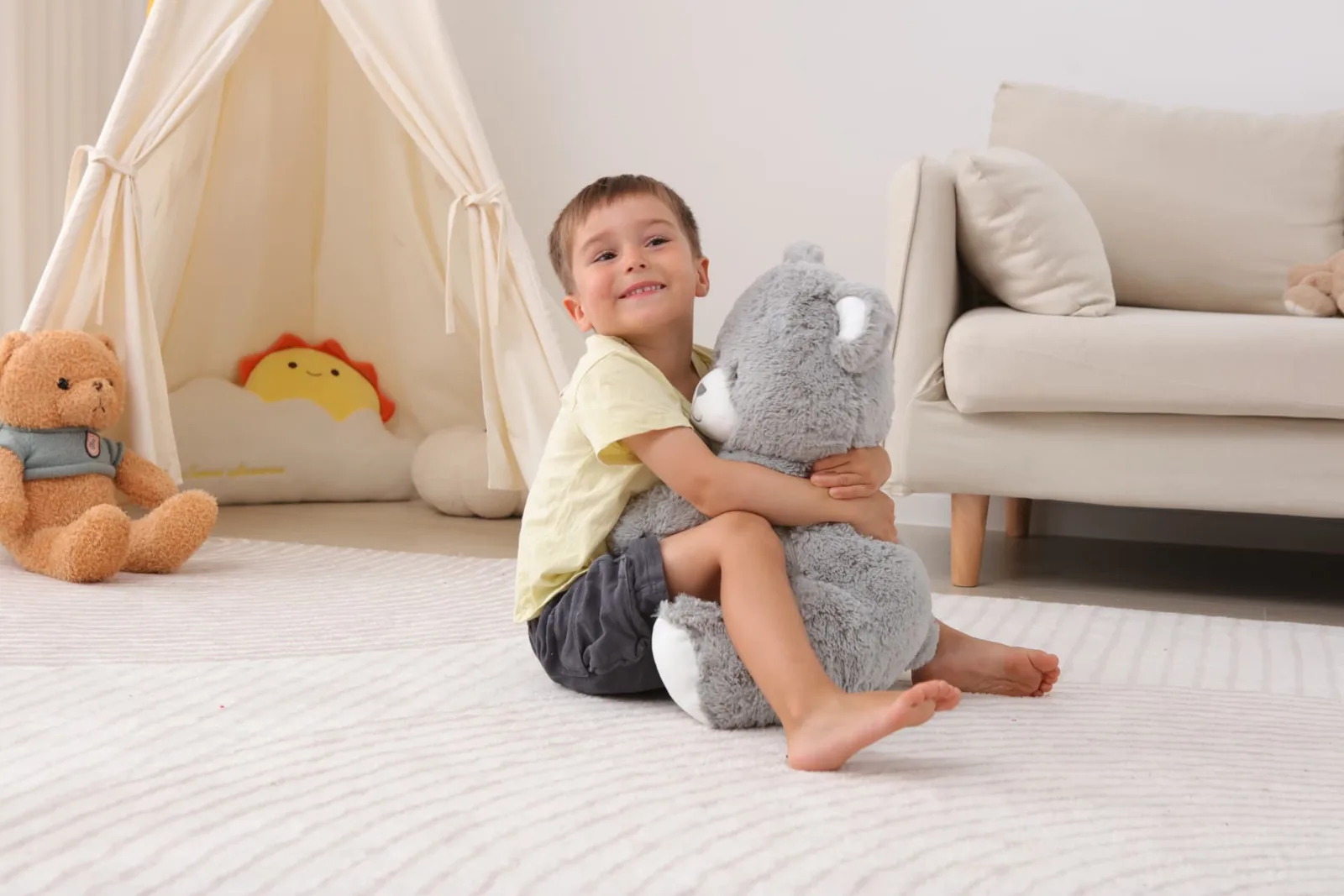
- Weighted comfort — a soft weighted toy on the lap during story time gives calming deep pressure
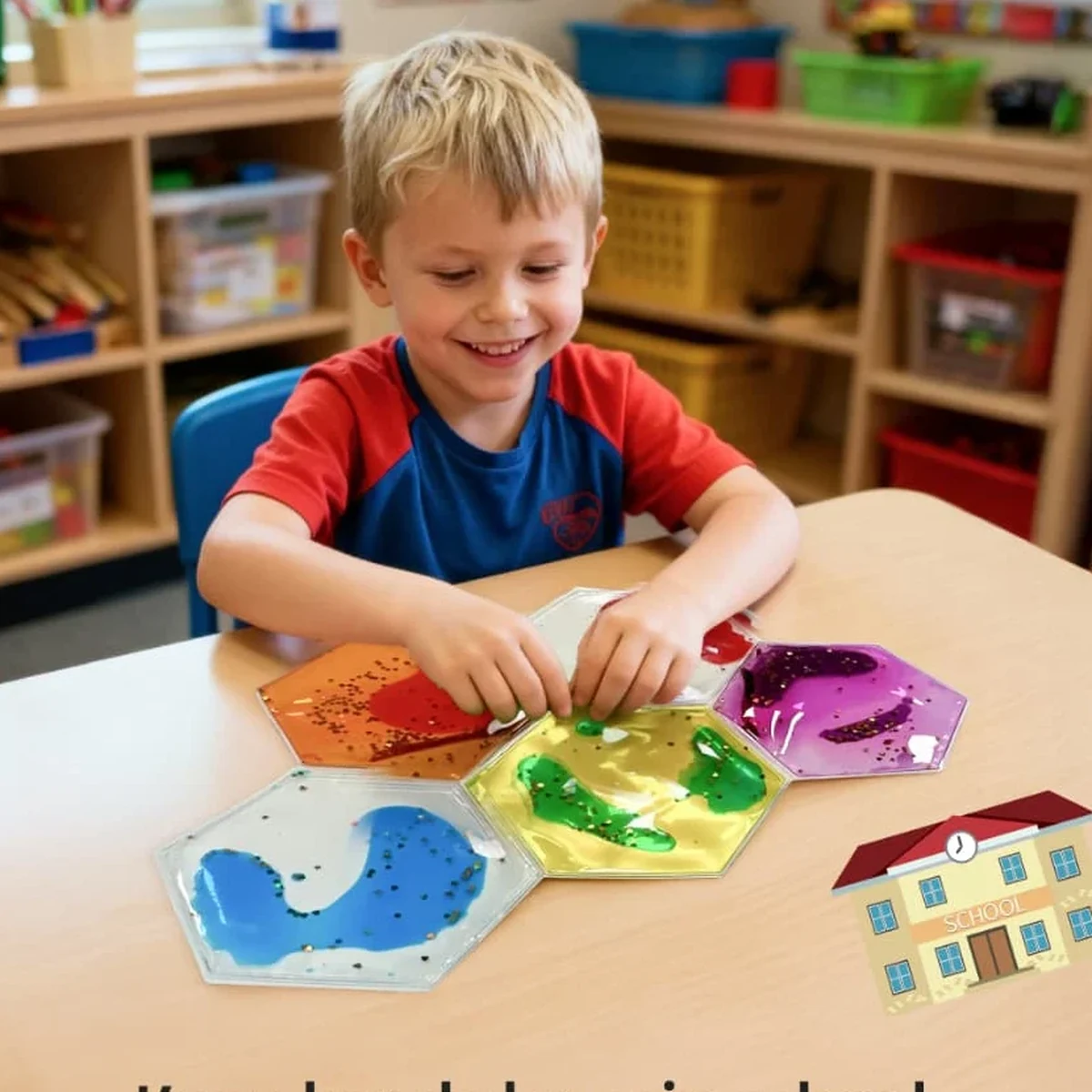
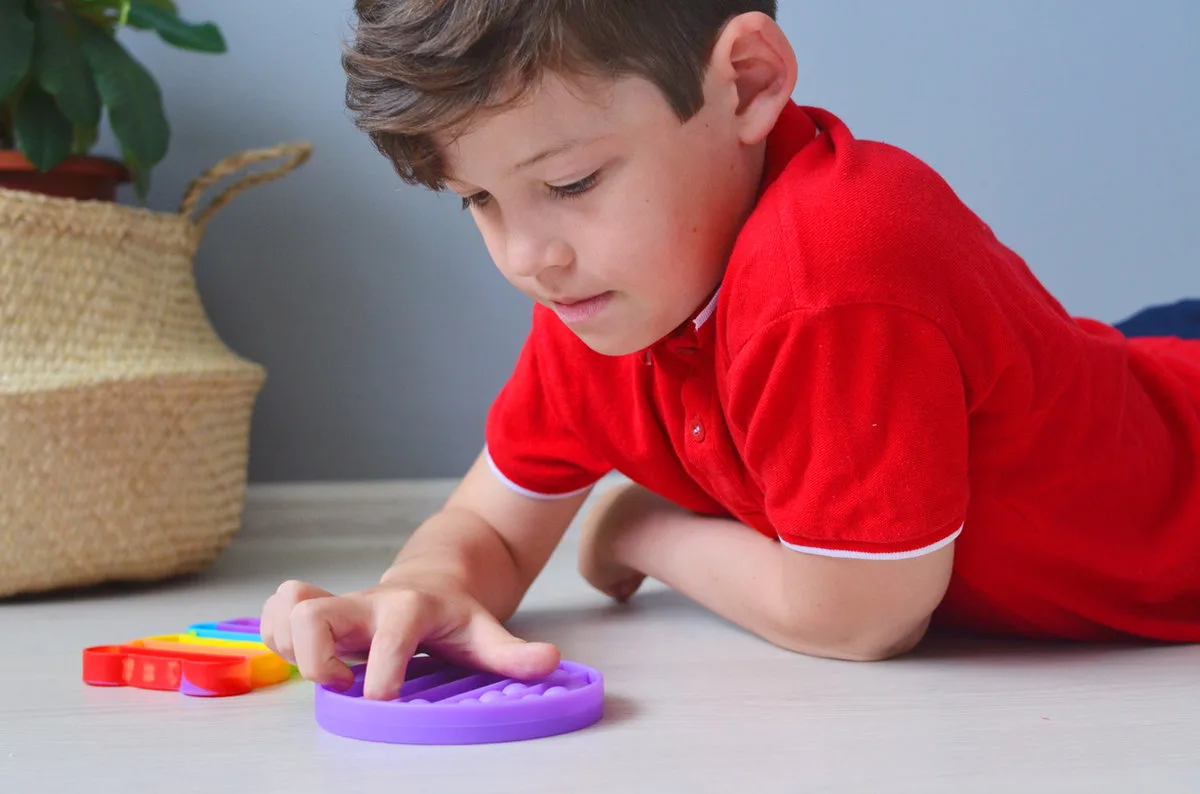
- Liquid tiles — pressing and watching colours shift is mesmerising and requires no instructions
- Taste-safe trays — rice, chickpea foam or oobleck give rich tactile input for cautious hands
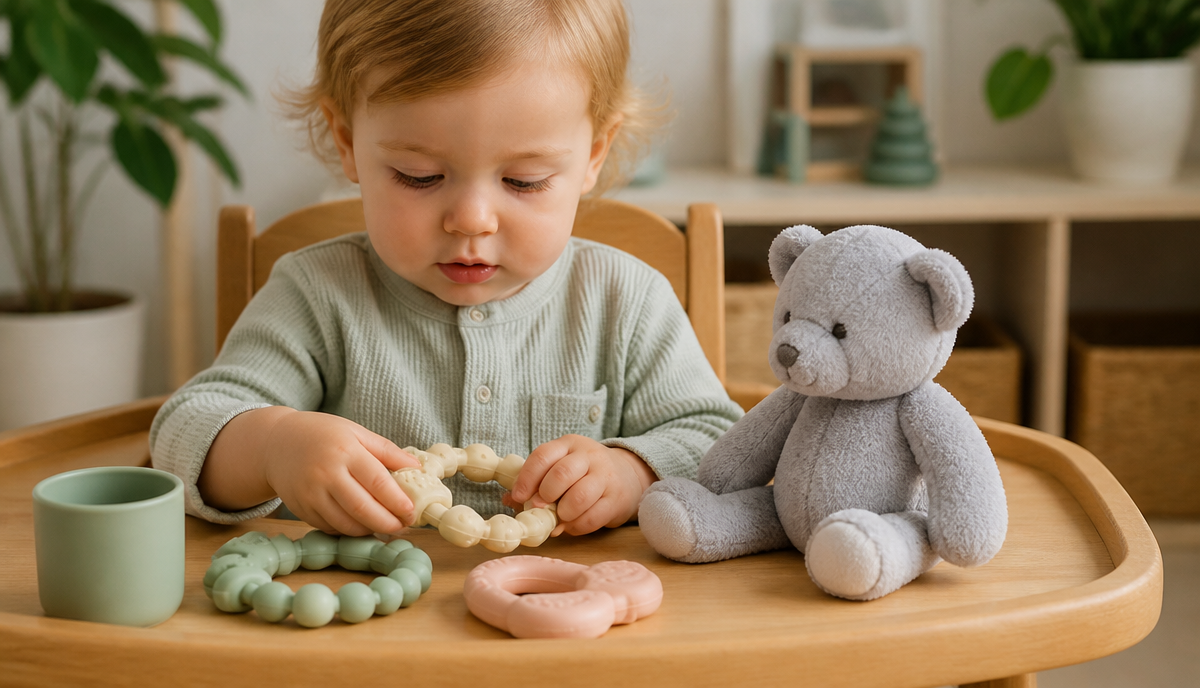
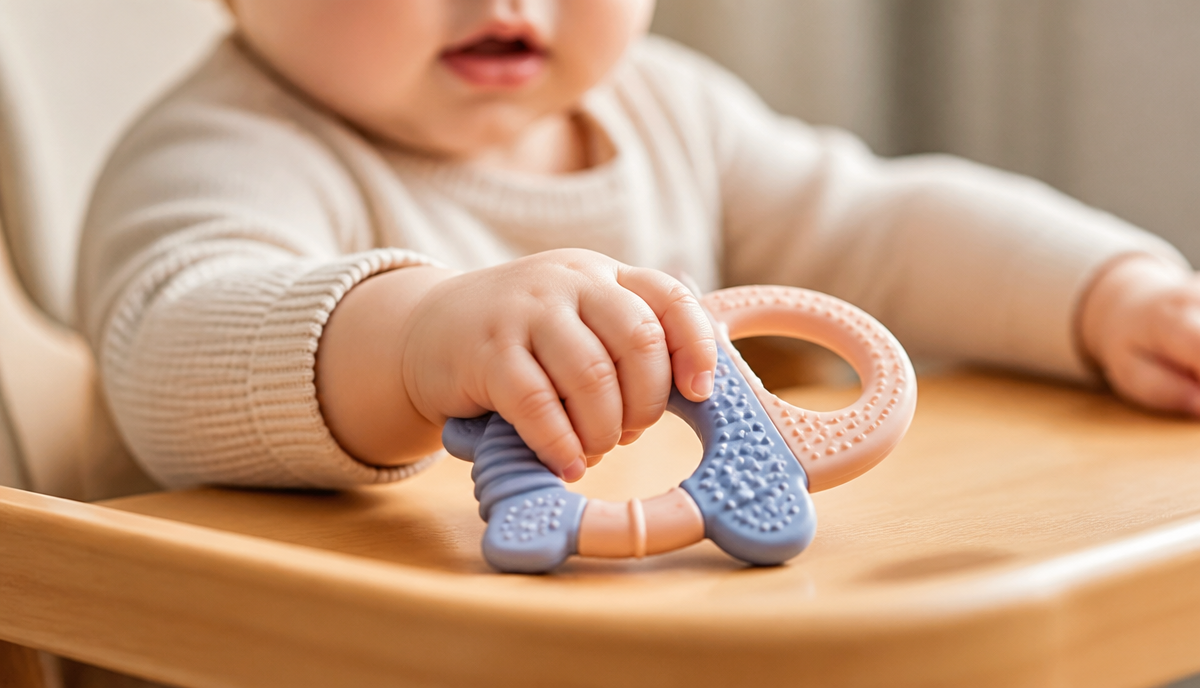
- Teethers and rattles — repetitive chewing and shaking is soothing oral and auditory input
- Wooden latches — opening, closing and repeating a single motion is grounding and focusing
A weighted toy can be especially grounding for a child who seeks deep pressure. The Jumble Bear weighted bear.
Following the child's lead
The single most useful principle is also the simplest: let the child lead. If they want to line the tiles up in a row instead of stacking them, that is the activity. If they want to chew the teether for twenty minutes, that is the activity. Autistic play does not always look the way we expect, and it does not need to. The goal is not to steer a child towards a "right" way to play — it is to offer safe, open-ended materials and let their nervous system tell you what it needs. Open-ended tiles like the Jumble Comb.
Keep sessions short, end while things are still going well, and watch for the signs that say enough — covering ears, turning away, pushing the toy aside. Learning to read those cues is a skill worth more than any toy.
A gentle word of realism
Sensory play is not a treatment for autism, and it is not meant to be. It will not replace professional support, an EHCP, or the therapies your child may benefit from. But as one part of a calm, predictable home routine, it is one of the most accessible, low-cost things you can offer — and for many children, genuinely transformative in small, daily ways. Browse our full library of taste-safe sensory play ideas.
The short version
Sensory play gives an autistic child the input their body is asking for, in a way they can control. It helps with regulation, focus and confidence, and it works best when the child leads. Start small, keep it simple, and let the toys do the talking.

Keep Reading
What is platinum silicone? A parent's guide to the safest teething material
Are Montessori toys a good fit for children with ADHD?
What is the difference between Montessori and regular toys?
Keep it simple: What are the benefits of Montessori Toys?
What are Sensory Toys?
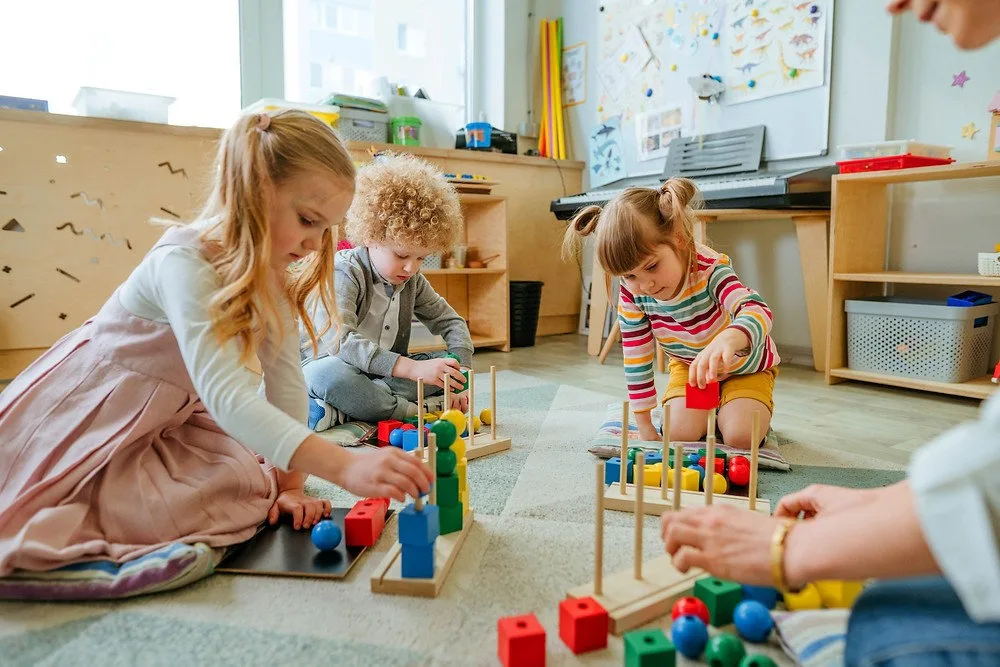
The Importance of Colours in Sensory Play
What Can be Used as a Teething Toy for Babies?
Is Giving Teethers to Babies Good or Bad?
A Child's Sensory Journey: Matching Sensory Toys and Play to Age
Do Sensory Toys Help ADHD?
Toys That Go With This Read