
What is platinum silicone? A parent's guide to the safest teething material
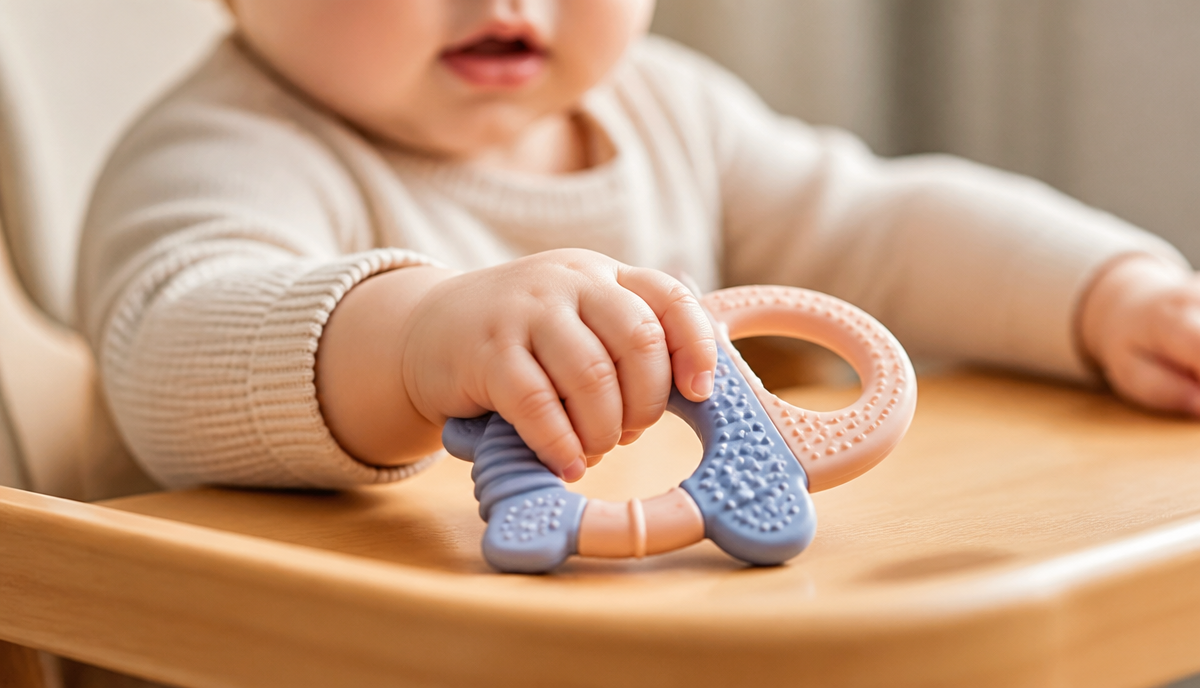
If you have shopped for a teether, a sippy cup or a baby spoon lately, you have probably seen the words "platinum silicone" printed on the packaging. It sounds premium — and it is — but the name does not tell you much about what it actually is. This guide breaks it down in plain English, so you can shop with confidence and know exactly what is going into your baby's mouth.
First, what is silicone?
Silicone is not plastic. It is a synthetic polymer made from silica — the same sand that makes glass — combined with oxygen, carbon and hydrogen. The result is a rubbery material that is heat-stable, flexible and naturally free from the chemicals that worry parents most, such as BPA and phthalates. Silicone feels soft but holds its shape, which is exactly why it is so useful around babies: gentle on gums, durable enough to chew, and stable at high temperatures.
Not all silicone is cured the same way
Raw silicone does not hold a shape on its own. It has to be cured — a chemical process that cross-links the polymer chains so the material sets permanently. How that curing happens is the whole story, and it is where "platinum" silicone earns its name.
There are two main curing methods. Peroxide curing uses peroxide chemicals to trigger the reaction, which can leave behind trace by-products that have to be washed out. Platinum curing, also called addition curing, uses a tiny amount of a platinum catalyst instead. Because the reaction is clean and complete, there are no peroxide residues to remove and far fewer potential contaminants left behind.
Why platinum-cured silicone is considered the gold standard
Platinum-cured silicone is the grade trusted for the things that matter most. It is the same type of high-purity silicone commonly used for baby bottle teats, medical devices, and food-contact products. That trust comes down to four things that genuinely matter for a teething baby.
- Exceptional purity — no peroxide by-products and minimal extractables
- Stable at high heat, so it survives sterilising, boiling and dishwashers
- Chemically inert, meaning it does not react with or leach into food and saliva
- Non-toxic and free from BPA, phthalates, PVC, latex and heavy metals
For a product that spends hours in a baby's mouth, those properties are not a luxury. They are the baseline. Peroxide-cured silicone can be perfectly safe when manufactured well, but platinum curing removes a whole category of worry from the start. That is why every Jumble Dream silicone toy, including the Jumble Waggle teether.
Is platinum silicone food safe?
Yes. Platinum-cured silicone is widely recognised as food-contact safe and is used in bakeware, cooking utensils and baby bottle teats. It is taste- and odour-free, does not retain flavours, and will not break down in warm, wet environments — which is exactly where teethers live.
Is platinum silicone plastic?
No. Silicone is a distinct material with a different chemistry from plastic. Plastics are petroleum-based polymers; silicone is a silica-based polymer. Silicone does not contain BPA, BPS or BPF — those concerns belong to certain hard plastics — and it does not shed microplastics in the same way. It is also more durable and heat-resistant than most plastics, which is why it is preferred for anything a baby mouths.
How to tell platinum-cured silicone from cheaper silicone
It is hard to tell silicone grades apart by eye, but a few clues help. Platinum-cured silicone is usually odourless straight out of the packet, whereas peroxide-cured silicone can carry a faint chemical smell that fades after washing. Reputable brands will say "platinum-cured" or "platinum silicone" on the packaging and back it up with independent test reports. If a product simply says "silicone" with no grade specified, it is worth asking which curing method was used.
- Look for the words "platinum-cured" or "platinum silicone" on the label
- It should be odourless when new, with no chemical smell
- Check for independent test reports, not just marketing claims
- Be cautious of very cheap silicone — the curing method may be peroxide
- Food-grade and baby-grade silicone should always be platinum-cured
A practical note on care
Even the best silicone benefits from the right care. Wash it with warm soapy water before first use, avoid sharp knives or biting beyond normal teething, and check regularly for splits. Most platinum-cured silicone can be sterilised, boiled or run through the dishwasher — though a few items with electronic parts cannot, so always check the product's own instructions. The Jumble Jiggle, for example, is steriliser and UV safe but not boiling-water safe.
The short version
Platinum silicone is simply silicone cured with a platinum catalyst instead of peroxide, giving it higher purity and making it the grade trusted for baby bottles and medical products. For teethers and baby tableware, it is the safest, cleanest option available — soft on sore gums, free from the chemicals parents worry about, and stable enough to withstand the heat and scrubbing of daily life. When you see "platinum-cured" on a Jumble Dream product, that is what it means.



Toys That Go With This Read