
Are Montessori toys a good fit for children with ADHD?
If your child has ADHD, you have probably watched them flit from one toy to the next in the space of a minute, leaving a trail behind them. It can feel like nothing holds their attention for long. So it is fair to ask whether a shelf of quiet wooden toys is really going to change anything.
Children with ADHD often do best in environments that are calm, predictable and hands-on. That is exactly what Montessori-inspired play is designed to offer: a small number of purposeful materials, a clear beginning and end to each activity, and complete freedom to repeat something until it feels mastered.
Why simpler toys often work better
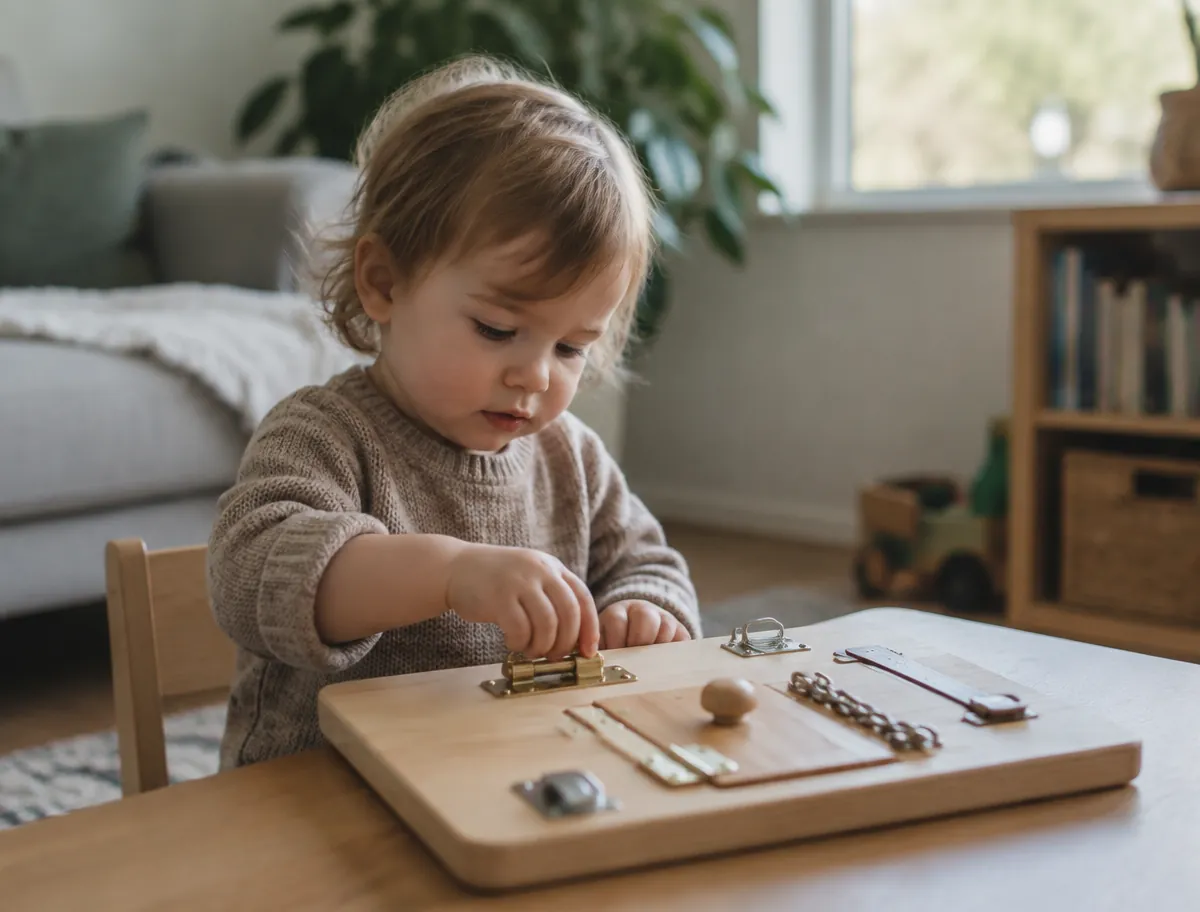
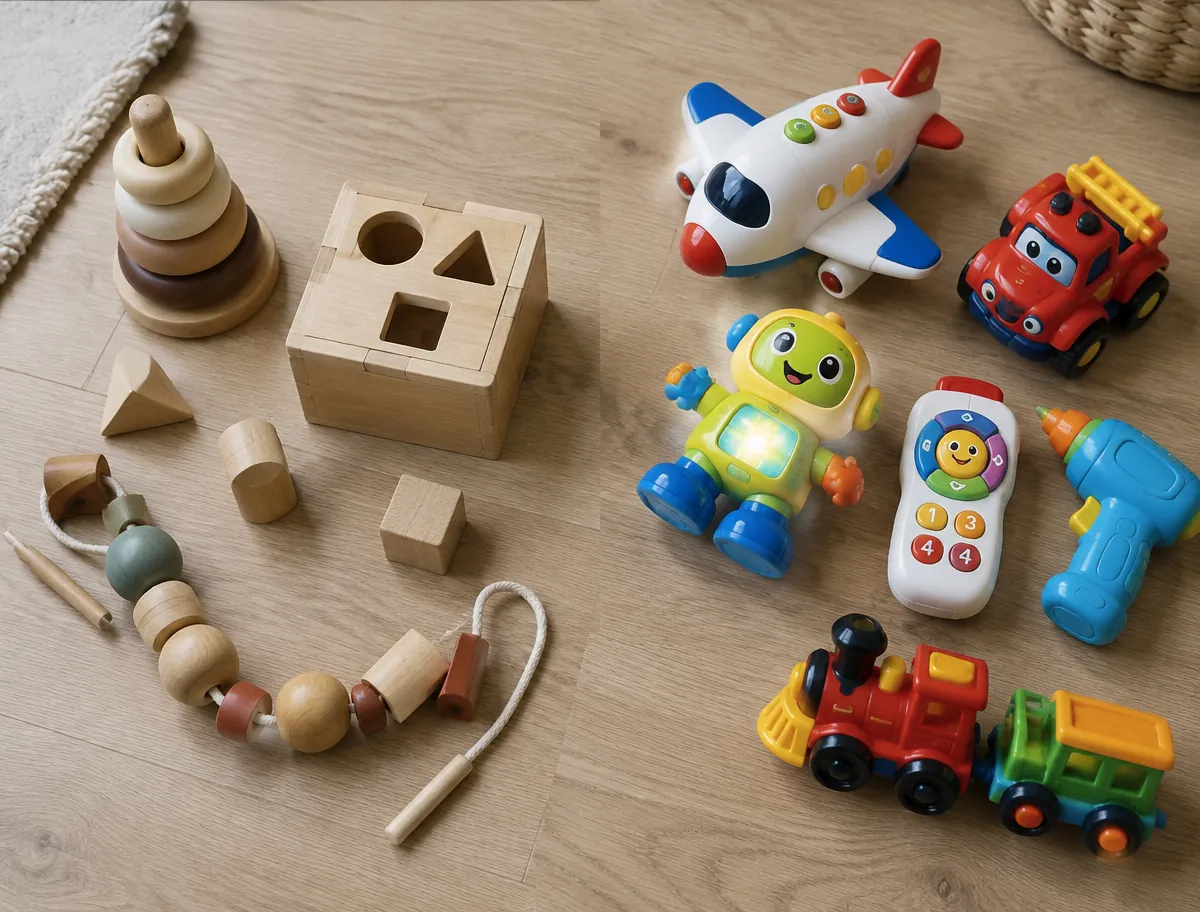
Battery-powered toys make all the decisions for a child. They light up, sing and move whether or not the child is really engaged, and the brain quickly learns that the entertainment arrives on its own. Montessori toys reverse that relationship. A busy board, a chunky puzzle or a row of switches only responds when the child acts, which keeps attention anchored on what their own hands are doing.
That small shift matters more than it sounds. Instead of competing with a toy for attention, a child is steering the activity — and being in charge is one of the most reliable ways to keep a distractible brain engaged.
- Fewer competing sounds and lights, so it is easier to settle into one task
- Immediate, honest cause and effect, which is naturally motivating
- A visible sense of completion that builds confidence
- Repetition without pressure, which supports self-regulation
- Clear physical boundaries — one tray, one activity, one outcome
Choosing the right materials
Look for natural materials with a satisfying weight and texture, muted colours rather than neon, and one clear purpose per toy. Wooden activity boards, shape sorters, threading toys and simple puzzles all work well. Avoid anything that does several unrelated things at once — it splits attention before play has even started. the Jumble Busy Board.
If your child seeks movement or deep pressure, do not fight it. Pair quiet table-top play with sensory activities such as water play, kinetic sand or a rice tray, and let the two take turns through the day. our sensory play ideas.
Set up the space, not just the toy
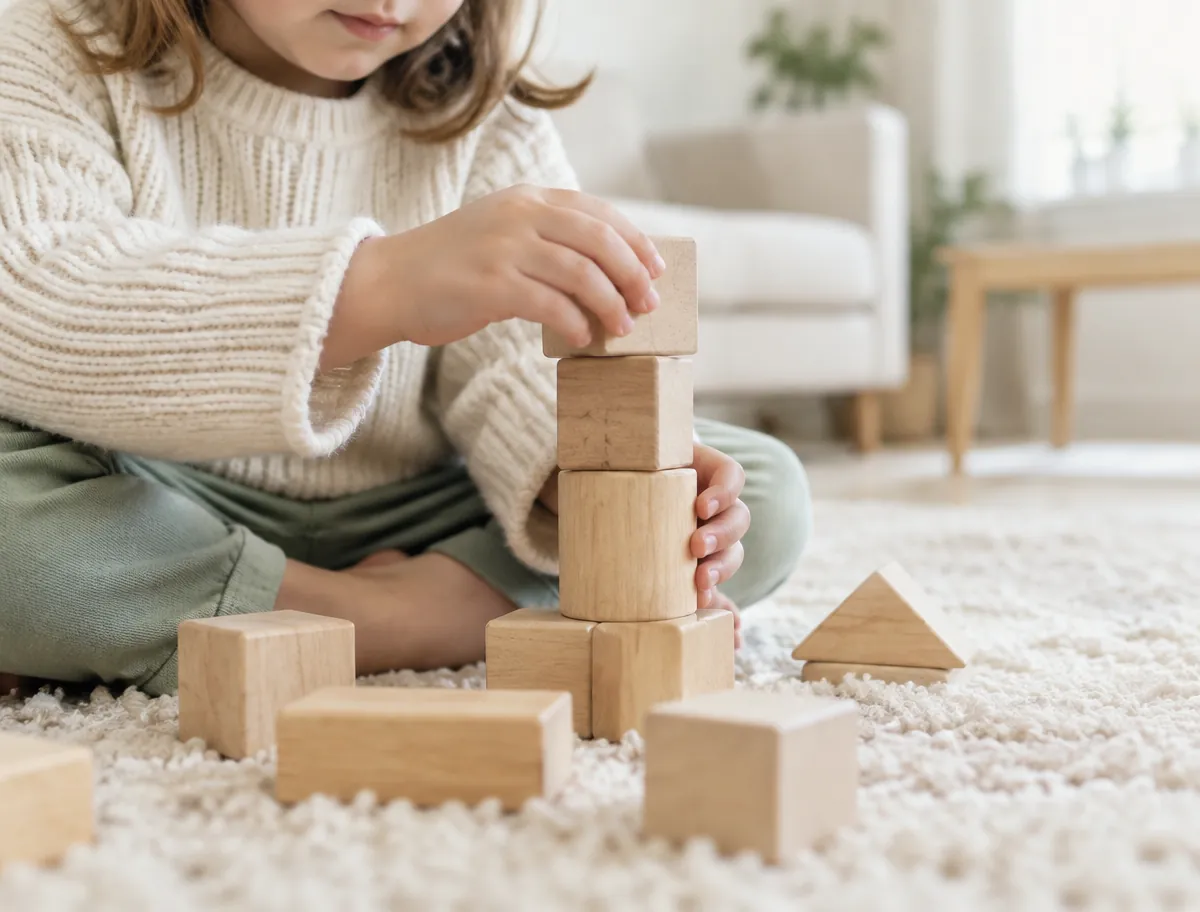
Half the work is in the environment. Rotate toys so only a handful are available at once, keep them on a low open shelf where your child can see everything at a glance, and give each activity its own tray or basket. An uncluttered shelf removes a huge amount of decision-making before play even begins, and choosing is often the hardest part.
Keep sessions short and end them while things are still going well. Five focused minutes that finish on a high note will do far more for confidence than twenty minutes that end in frustration.
A gentle word of realism
Every child is different, and Montessori materials are not a treatment for ADHD — they will not replace professional support, and they are not meant to. But as one part of a calm, predictable play routine, they can make focused play feel achievable, and genuinely enjoyable, for children who find it hard to settle. That is a lovely thing to be able to offer.

Toys That Go With This Read